After a few days in the lanes and on the river, a day in open country is welcome. South of Varanasi the Gangetic plain meets the edge of the Vindhya range, and within a couple of hours’ drive there is a fort, several waterfalls and quiet reservoirs.
Chunar’s sandstone is the same stone the Mauryan pillars were cut from.
Chunar Fort
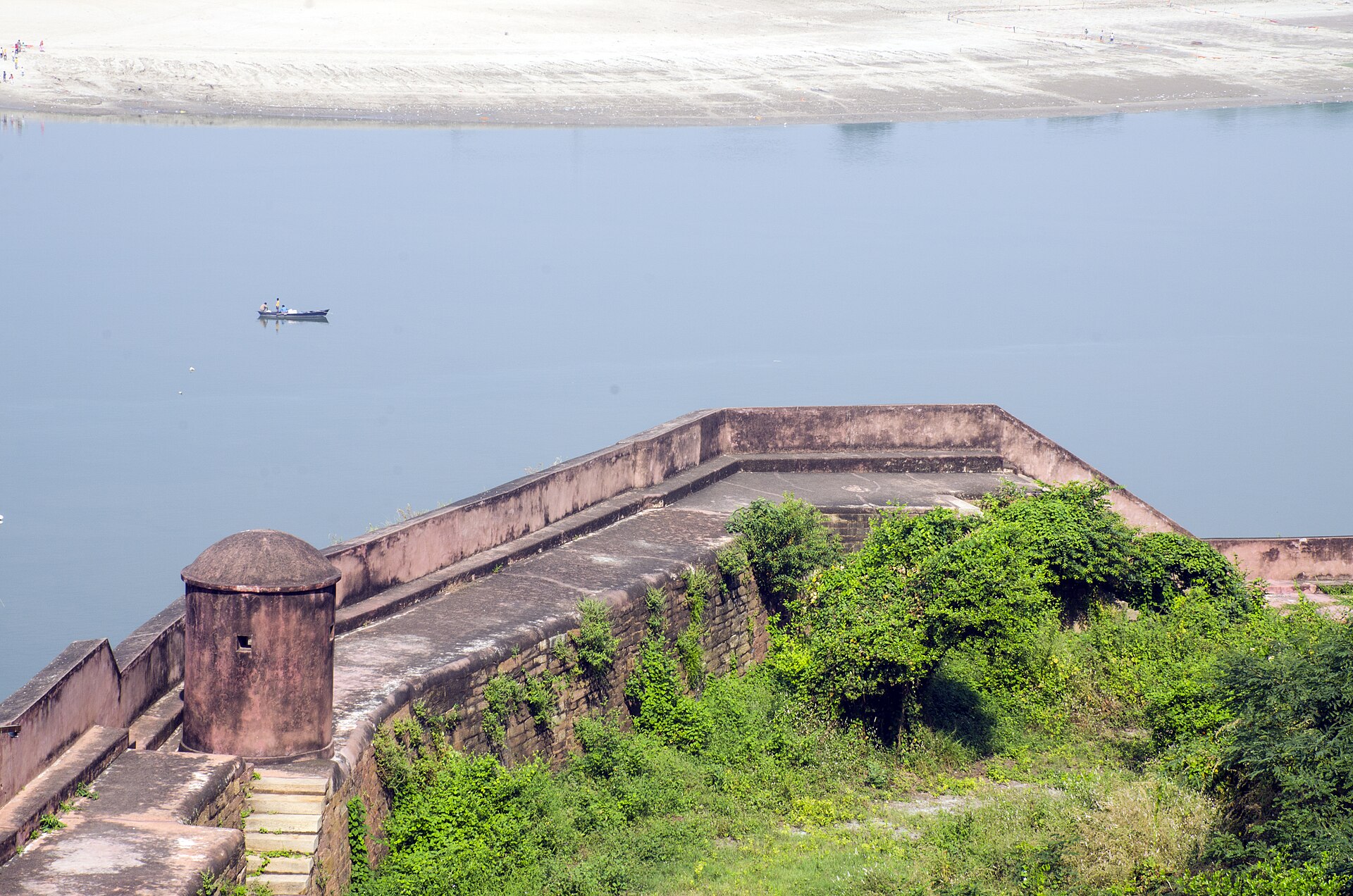
About forty kilometres south-west of the city, Chunar Fort stands on a sandstone ridge above a bend in the Ganga. It has been held in turn by Sher Shah Suri, the Mughals and the British, and local tradition places the resting place of the sage-king Bhartrihari within its walls.
Chunar’s sandstone is the same stone the Mauryan pillars were cut from, the Sarnath lion capital among them. The fort is reached by road to the gate, and the views over the river are the reward; a few slopes and steps remain inside.
Lakhaniya Dari
Near Ahraura in Mirzapur district, roughly fifty kilometres from Varanasi, a stream drops over a rock shelf into a pool among the hills. Lakhaniya Dari is at its fullest from July to September. The path down is rough and uneven, so it is a trip for the steady-footed; others can enjoy the view from the top.
Rajdari, Devdari and the reservoirs
In the Chandraprabha Wildlife Sanctuary, in Chandauli district, the Rajdari and Devdari falls tumble through wooded gorges. Rajdari has viewing points close to the parking area, which makes it the gentler of the two. The drive passes reservoirs and dams set among the hills, pleasant places to stop for tea.
Chunar and Lakhaniya Dari fit together in one long day; the Chandraprabha falls are better as a day of their own. Leave early, take water and something to sit on, and use a car with a driver who knows the roads — the last stretches are not well signposted.